
Hair care or haircare is an overall term for hygiene and cosmetology involving the hair which grows from the human scalp, and to a lesser extent facial, pubic and other body hair. Hair care routines differ according to an individual’s culture and the physical characteristics of one’s hair. Hair may be colored, trimmed, shaved, plucked or otherwise removed with treatments such as waxing, sugaring and threading. Hair care services are offered in salons, barbershops and day spas, and products are available commercially for home use. Laser hair removal and electrolysis are also available, though these are provided (in the United States) by licensed professionals in medical offices or specialty spas
Introduction to Hair-Care and Hair Loss
- Define hair-care as more than beauty → it’s about scalp health.
- Why hair-care routines matter for preventing damage.
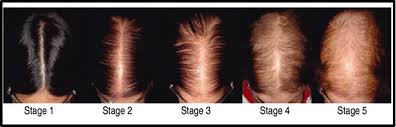
- Introduce androgenic alopecia (male pattern baldness, female pattern hair loss).
- Briefly state: this guide gives science + routines + solutions.
What is Androgenic Alopecia?
- Definition & prevalence in men and women.
- Hormonal basis (DHT sensitivity).
- Differences between men (receding hairline, crown thinning) and women (diffuse thinning).
- Emotional/psychological impact.
- Why consistent hair care plays a role in slowing progression.
Why Scalp Care = Hair Care
- Healthy scalp = foundation for strong hair.
- Sebum balance, exfoliation, hydration.
- Link to dermatology sources (AAD, Mayo Clinic).
- Internal link: Clean Beauty in Hair Care.
Essential Hair-Care Routine for Men and Women
- Gentle cleansing (sulfate-free shampoo, frequency).
- Conditioning & hydrating.
- Avoiding harsh treatments (heat, bleach, over-styling).
- Massage and circulation.
- Protective hairstyles & breakage prevention.
Best Hair-Care Ingredients for Androgenic Alopecia
- Medical actives: Minoxidil, Finasteride, Spironolactone.
- Botanical actives: Red Clover (DHT-blocking), Fenugreek (protein boost), Castor Oil (circulation).
- Supportive nutrients: Biotin, Vitamin D, Iron, Omega-3s.
- Cite PubMed/AAD for authority (outbound links).
Magnolique Twin Hair Tonic – Modern Hair Care Innovation
- Explain two-part system:
- Daily Lotion: lightweight, scalp-friendly, anti-shedding.
- Weekly Oil: castor + fenugreek + red clover for deeper nourishment.
- Massage Device: improves absorption & stimulates follicles.
- Why this fits clean beauty hair care → no harsh chemicals, plant-based actives, dermatologist-led.
- product page.
- Testimonials / how it can be integrated into routine.
Lifestyle Hair-Care Tips
- Genetics and health are factors in healthy hair. Proper nutrition is important for hair health. The living part of hair is under the scalp skin where the hair root is housed in the hair follicle. The entire follicle and root are fed by a supply of arteries, and blood carries nutrients to the follicle/root. Any time an individual has any kind of health concern from stress, trauma, medications of various sorts, chronic medical conditions or medical conditions that come and then wane, heavy metals in waters and food, smoking etc. these and more can affect the hair, its growth, and its appearance.
- Generally, eating a full diet that contains protein, fruits, vegetables, fat, and carbohydrates is important (several vitamins and minerals require fat in order to be delivered or absorbed by the body). Any deficiency will typically show first in the hair. A mild case of anemia can cause shedding and hair loss. Among others, the B group of vitamins are the most important for healthy hair, especially biotin. B5 (pantothenic acid) gives hair flexibility, strength and shine and helps prevent hair loss and graying. B6 helps prevent dandruff and can be found in cereals, egg yolk and liver. Vitamin B12 helps prevent the loss of hair and can be found in fish, eggs, chicken and milk.
- When the body is under strain, it reprioritizes its processes. For example, the vital organs will be attended to first, meaning that healthy, oxygenated blood may not feed into the hair follicle, resulting in less healthy hair or a decline in growth rate. While not all hair growth issues stem from malnutrition, it is a valuable symptom in diagnosis.
- Scalp hair grows, on average, at a rate of about 1.25 centimeters per month, and shampoos or vitamins have not been shown to noticeably change this rate. Hair growth rate also depends upon what phase in the cycle of hair growth one is actually in; there are three phases. The speed of hair growth varies based upon genetics, gender, age, hormones, and may be reduced by nutrient deficiency (i.e., anorexia, anemia, zinc deficiency) and hormonal fluctuations (i.e., menopause, polycystic ovaries, thyroid disease)
- Stress reduction.
- Sleep optimization.
- Exercise improves circulation.
- Hydration & scalp protection (UV filters).
Professional Hair-Care Treatments
- Dermatology: PRP, microneedling, mesotherapy.
- Hair transplant options.
- Combining clinical care with home hair care routines.
Future of Hair-Care for Hair Loss
- Stem cell research.
- Exosome therapy.
- AI-driven scalp analysis.
- Personalized dermatology & hair care.
Conclusion
- Hair-care is long-term commitment.
- Androgenic alopecia manageable with combined approach.
- Magnolique Twin Hair Tonic as a science + nature solution.
- Encourage consistent routine.